FOOD BOOTH · Issue 007 · Xinglong Coffee Special · 2026.08
The "overseas-Chinese code" hidden in a cup of Xinglong coffee
When local beans become extremely scarce, how does an origin use overseas-Chinese culture and intangible heritage craft to break from selling beans to selling culture?
Xinglong Coffee · Overseas-Chinese culture · Intangible heritage craft
TO THE READER · FOOD BOOTH · Issue 007
What kind of food is worth your time to understand? Not just brand, price, advertising, or a few lines from a livestream. More importantly: Can the origin be checked? Can the certification be verified? Can the batch be traced? Can the supply chain be seen? Food Booth's job is simple: track origins, interpret certifications, observe supply chains, and translate the signals scattered across the professional world into choice criteria consumers can understand. We believe: truly worth-noting foods always leave a trail.
In the first issue we set out from Pu'er coffee. This issue we go south, to Wanning. To see a cup of coffee brought home in a returning overseas Chinese's pocket, after 70 years of ups and downs, stun the world again.
The value anchor of a good cup of coffee has long shifted from the scarcity of "rare varieties" to the depth of the whole industry chain. It is more like a relay race of whole-chain coordination: from source germplasm innovation and fine cultivation, to mid-stream deep processing and quality control, to terminal origin story and cultural expression. The excellence of every link adds irreplaceable value to the final cup, and gives Chinese coffee a clearer coordinate on the world map.
If #YunnanCoffee represents China's coffee industry breaking through in "germplasm" and "deep processing," then Hainan Wanning's #XinglongCoffee shows us a completely different path: when local bean output is extremely scarce, how does an origin rely on its unique "overseas-Chinese culture" and "intangible heritage craft," under the policy dividend of the Hainan Free Trade Port, to leap from "raw-material export" to "cultural premium"?
01
The "overseas-Chinese flavor" brought home in a Nanyang pocket
THE OVERSEAS-CHINESE ORIGIN
Xinglong coffee's story begins in the pockets of returning overseas Chinese. In the 1950s, Chinese who returned from Malaysia, Indonesia, and elsewhere brought both the habit of drinking coffee and coffee seeds back to Xinglong, Wanning, Hainan. From then on, coffee was no longer an imported good, but a local daily ritual of "fried dough sticks with coffee."
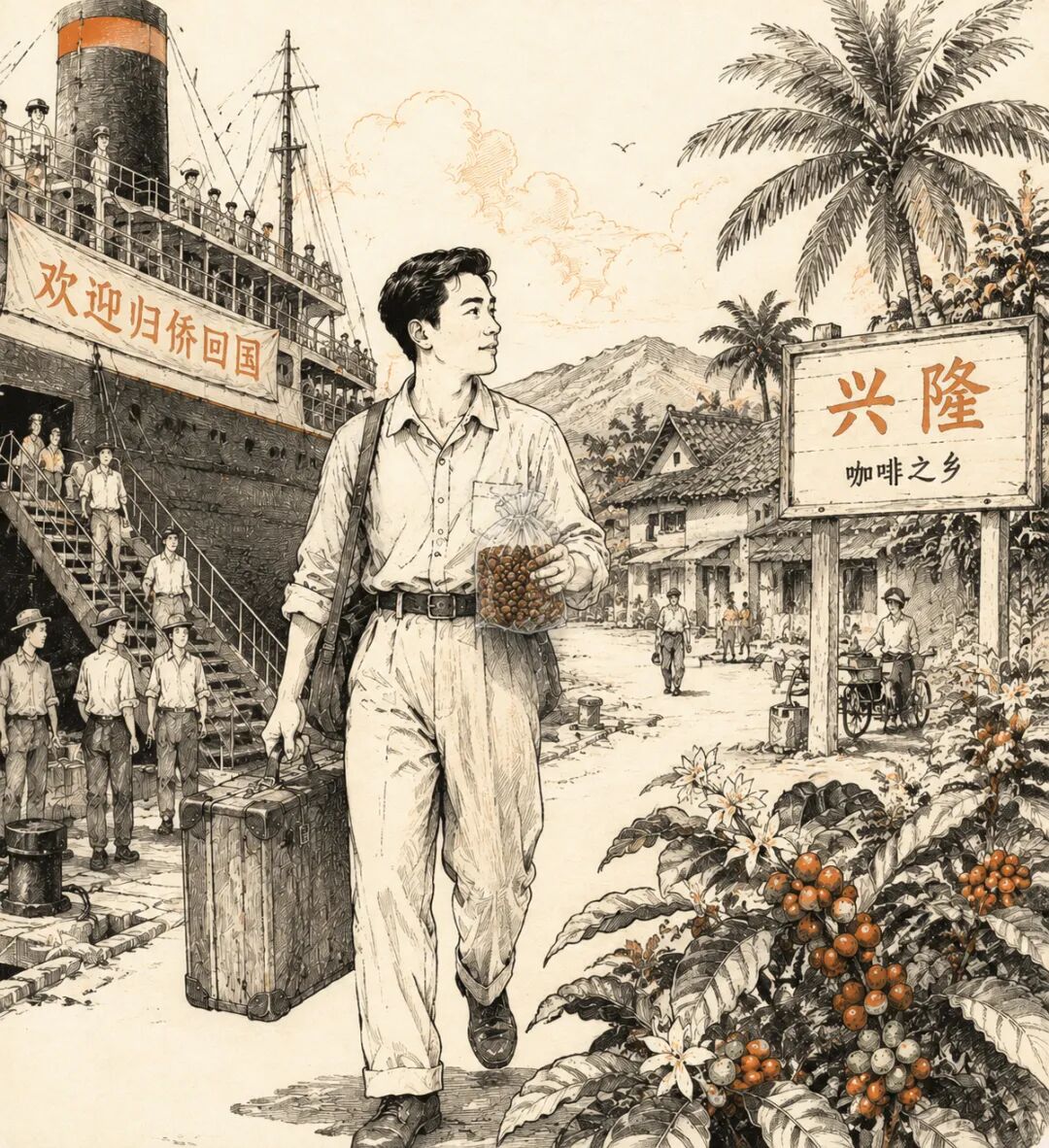
Figure 1 · Hainan Xinglong: the "overseas-Chinese code" hidden in a cup of coffee
This unique "overseas-Chinese gene" is Xinglong coffee's most precious asset. It was not defined by standards, but precipitated by generations of life. As early as 1960, when Premier Zhou Enlai tasted this cup of Nanyang-flavored coffee, he drank three cups in a row and praised it: "Xinglong coffee is world-class; I have drunk much foreign coffee, but our own-grown coffee tastes best."
This recognition from a national leader elevated Xinglong coffee from a field crop to the taste symbol of the overseas-Chinese spirit. In 2023, its traditional charcoal-roasting craft was listed as a Hainan provincial-level #intangible cultural heritage. From seeds in a pocket to heritage craft, Xinglong coffee's aroma holds the homesickness across mountains and seas, and echoes the Eastern wisdom that "where the heart is at peace, there is home."
02
A cup of coffee's "identity file": from Nanyang flavor to official certification
WHY IT IS VERIFIABLE
We often say trust comes from transparency. For Xinglong coffee, you can clearly understand its ins and outs through these dimensions.
- Check the "ID card": it holds the fourfold identity of #national GI protected product, agricultural-product GI, #China-EU mutual-recognition GI, and GI certification mark. This means it is, like Moutai and Wuliangye, a member of the national brand matrix, with strict official backing for both origin and quality.
- Taste the "Nanyang flavor": locally, ordering coffee means saying "Kopi-o" (歌碧欧) — a pronunciation from the Nanyang overseas Chinese term for coffee. "Kopi" is Malay for coffee; "O" is the Hokkien word for "black" (乌). Together it means "black coffee." Its special trait: the roaster adds butter and sugar in an iron wok, hand-roasting by feel. This craft yields its distinctive "strong but not bitter, fragrant but not harsh" flavor, quite different from Yunnan coffee's fruity acidity.
- Visit the "coffee town": in Xinglong Town, with a resident population of just over 30,000, hide more than 200 cafés. Coffee here is not just a drink but a tourism experience. You can go to a coffee manor to hand-pick and roast, even taste creative "coffee banquets" like coffee-braised chicken and fried coffee leaves.
- Tell "real from fake": this is the key point. Because local bean output is limited, many "Xinglong coffee" products on the market actually use imported beans processed in Xinglong by the traditional craft. So what you consume more is "Xinglong's craft and flavor." To pick authentic products, look for the national GI special mark on the package and preferentially choose the 11 officially authorized enterprises' products.
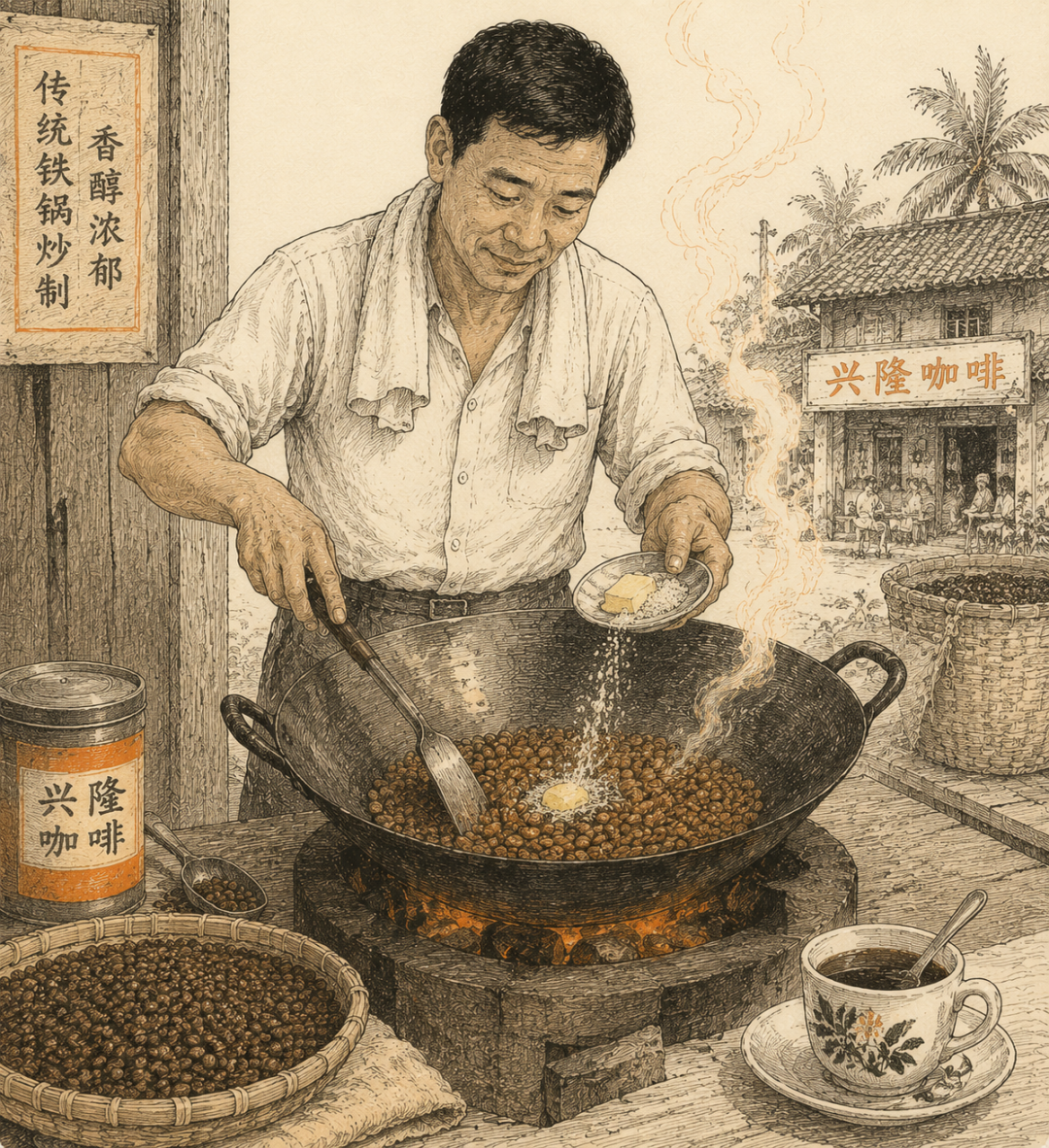
Figure 2 · Iron wok with butter and sugar, hand charcoal-roasted Xinglong flavor
03
Four enterprises, four breakthrough paths
FOUR PATHS, ONE REGION
Macro data sketch the industry's outline; the companies actually doing the work show us the direction ahead. We selected 4 from many enterprises.
1Charoen Pokphand (Hainan) Xinglong Coffee "Second venture" of New China's first coffee factory
Curated 01 / 04
Who it is: its predecessor was the Xinglong Overseas Chinese Farm Coffee Factory founded in 1952, regarded by the industry as the precursor of New China's first coffee factory. In 2020, Fortune Global 500 company Charoen Pokphand Group (CP) took it over and transformed it into a modern industrial park.
What it did: while preserving the traditional hand charcoal-roasting craft, it introduced modern production lines. More importantly, leveraging the #HainanFreeTradePort policy advantage, it achieved "global sourcing, Hainan processing, global sales," and in 2025 completed Wanning's first-ever export of roasted coffee beans, truly taking "Xinglong craft" overseas.
Why it matters: CP's entry brings this old brand scarce international channels and brand-operating capability. It is currently the only Xinglong coffee enterprise clearly doing "going global," and its strategic direction sets the ceiling for the whole origin.
2Hainan Xingkang Origin Organic Coffee (Xinglong Coffee Valley) A "living museum" guarded by three generations of overseas Chinese
Curated 02 / 04
Who it is: a coffee valley founded by descendants of returned overseas Chinese from Thailand; one of Wanning's larger coffee planting bases.
What it did: like a "living museum," it still insists on hand-roasting with charcoal iron wok, butter, and sugar. At the same time, it adopts an organic understory-intercropping model — no pesticides, organic fertilizer — and has obtained organic product certification.
Why it matters: its value lies in the complete preservation of traditional overseas-Chinese coffee culture. If you want to understand "what traditional Xinglong coffee tastes like," this is the most authentic, most complete experience.
3Hainan Xiaoyangqiao Technology "Nanyang light-luxury" coffee made by young people returning home
Curated 03 / 04
Who it is: a next-generation brand founded in 2019 by a post-80s "third-generation overseas Chinese" with overseas study background.
What it did: it genuinely does "youthful." Fashionable packaging, coffees using internationally popular processing methods like #honey process and natural, plus new products like fruit coffee and milk coffee. More importantly, it is good at storytelling, re-packaging overseas-Chinese culture in a language and way young people understand.
Why it matters: it represents Xinglong coffee's hope of going national and attracting young consumers. If Xinglong coffee is to "break out," it needs players like Xiaoyangqiao who can translate the culture and connect to new consumer groups.
4Wanning Longyuan Coffee Early domestic organic-certified "specialty" exploration
Curated 04 / 04
Who it is: an ecological manor founded in 2010 by the Zeng father and son; one of China's earliest organic-certified coffee manors, and a filming location for the food show "Twelve Flavors of Feast" (十二道锋味).
What it did: while preserving traditional craft, it innovated an "estate original coffee" — using additive-free low-temperature roasting to retain the coffee's own flavor as much as possible. The manor also blends gyrotonic healing, a bookstore, and a chocolate workshop, upgrading coffee experience into a lifestyle.
Why it matters: it explored a "specialty" path. While most Xinglong coffee still does traditional charcoal roasting, Longyuan began trying to connect to the broader specialty market; its "organic" label and media exposure won it a distinct brand recognition.
APPENDIX · Evidence-observation matrix of the four enterprises
Using Food Booth's multi-dimensional framework, we observed each company's sufficiency of public evidence — note, this measures "how much you can check," not "whether the coffee tastes good."
Public-information maturity — four Xinglong coffee enterprises
| Company | P1 Origin identity | P2 Transparency | P3 Quality cert. | P4 Traceability | P5 Consistency | P6 Responsibility |
|---|
| CP | Leading | Leading | Established | Developing | Established | Established |
|---|
| Coffee Valley | Established | Established | Established | Developing | Established | Established |
|---|
| Xiaoyangqiao | Established | Developing | Developing | Developing | Developing | Established |
|---|
| Longyuan | Established | Developing | Established | Developing | Established | Developing |
|---|
Levels: Leading · Established · Developing (high to low). This table is a public-information observation, not a quality ranking; Food Booth does not judge whether a company is good or bad, only observes the sufficiency of its public evidence. One thing is visible at a glance: all four sit evenly at "Developing" on "Traceability" — a shared shortcoming of the entire Xinglong origin.
04
Beyond the halo, challenges remain
THE OTHER SIDE
Having told the story this far, we also need to see its two faces.
Face A: unique advantages
- A nationally unique cultural IP: the "three-affection culture" of "leader's sentiment, overseas-Chinese bond, people's friendship" is a narrative asset money can't buy.
- Heritage craft: the distinctive charcoal-roasting craft is its most memorable taste label.
- Policy leverage: the Hainan Free Trade Port's "zero tariff" and other policies provide real, hard support for industry development.
Face B: real predicaments
- "No beans to harvest" and a traceability gap: local bean output is very low, and enterprises rely heavily on imported green beans for processing. This "global sourcing, island processing" model solves capacity, but makes raw-material sources complex; whole-chain traceability still sits at "Developing," and the consumer end can't precisely trace origin.
- Low recognition: outside Hainan island, brand influence drops off a cliff; consumer awareness is nearly zero.
- Inheritance gap: the masters who control the charcoal-roasting heat are aging, and fewer young people are willing to learn.
05
From "geographic coordinate" to "cultural coordinate"
CULTURE AS IDENTITY
Xinglong coffee's story is a story about "cultural rebirth."
Its greatest asset is culture, and its greatest challenge is how to turn the cultural story, through solid industrial capability, into a brand consumers nationwide can trust. This drink brought home in returning overseas Chinese's pockets is learning how to be rediscovered by the world.
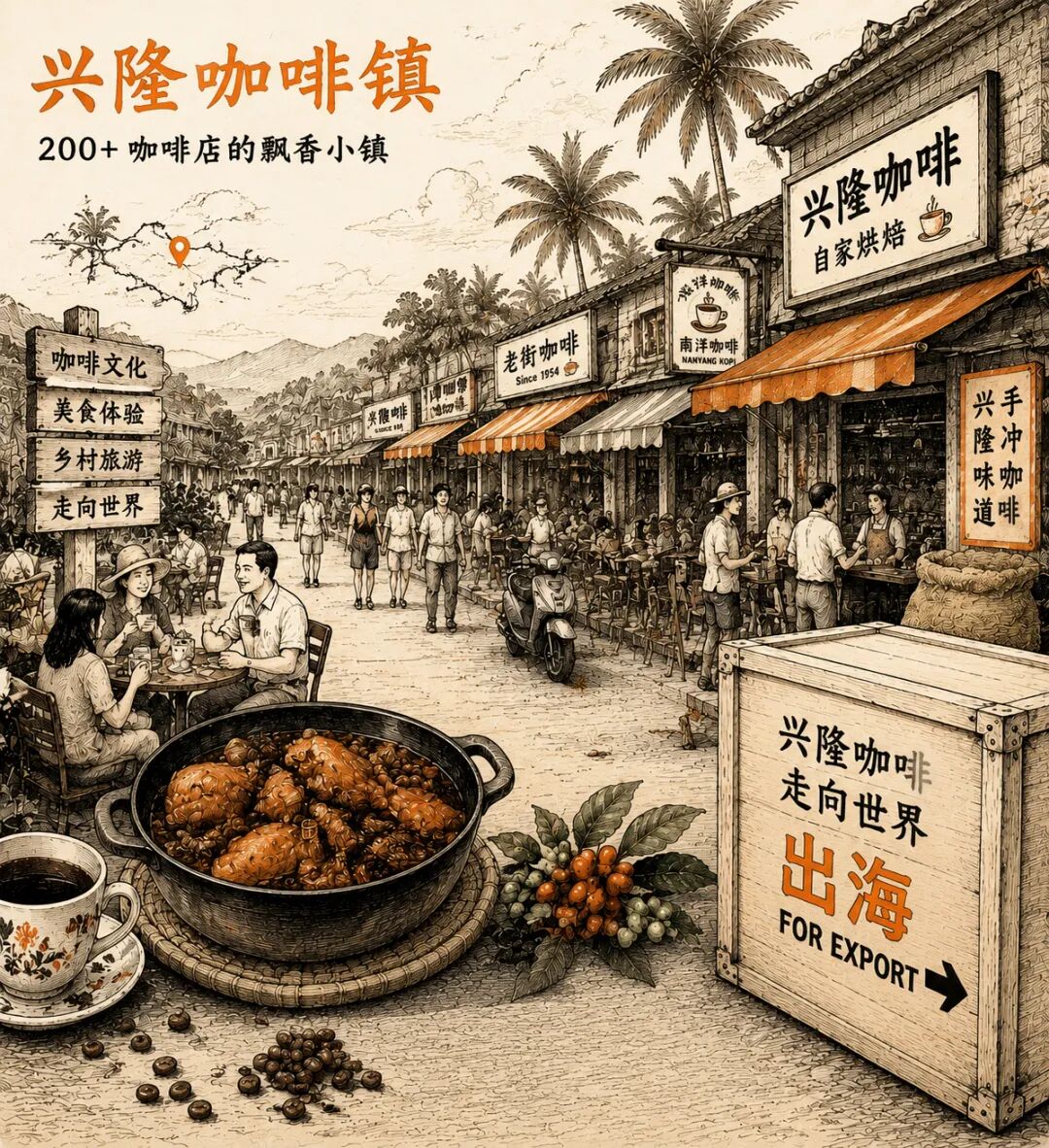
Figure 3 · Coffee town, coffee banquets, and going global — Xinglong is being rediscovered by the world
From CP's "going global" exploration, to Xiaoyangqiao's "youthful" breakthrough, to Longyuan's "specialty" deepening, Xinglong coffee is proving in different ways: when a cup of coffee becomes a carrier of history, culture, and lifestyle, its value is redefined.
06
China coffee's "three-city tale": the breakthrough paths of Pu'er, Baoshan, and Xinglong
THREE CITIES, ONE ANSWER
Looking at China's vast coffee map, Pu'er, Baoshan, and Xinglong represent three utterly different breakthrough paths. They seem to fight separately, but all answer the same core question: how can a coffee tree transcend the fate of a crop and transform into a brand with a soul?
Pu'er's answer is "standards." It chose a hardcore breakthrough, writing germplasm breeding, processing craft, green-bean grading, and export norms step by step into strict national standards. It builds rational trust with data and certification, letting consumers clearly "check" an origin's hard power.
Baoshan's answer is "full chain." On top of Pu'er's standards, it pushes every link of the chain to the extreme. From Zhongka's germplasm breakthrough, to Xinzhai Village's organizational restructuring, to Bidun's transparent experience and Jinglan's deep-processing magic, Baoshan uses a complete "seed-to-cup" loop to prove that specialty coffee's value lies not only in growing well, but in making finely and selling far.
Xinglong's answer is "culture." With local beans scarce to near-negligibility, it chooses to shape coffee into an "identifiable identity" through deep overseas-Chinese memory and #intangible heritage craft. It builds emotional resonance with story and experience, letting consumers feel history's warmth in the tasting.
Though the paths differ, they converge: letting Chinese coffee thoroughly shed the mere "raw material" label and transform into a national brand consumers can truly know, understand, and willingly pay for.
When Pu'er's "standards," Baoshan's "full chain," and Xinglong's "culture" meet at the peak, we see not only the maturity of China's coffee industry, but a clear signal — Chinese coffee is no longer behind the world. With its own unique posture, it is carving its coordinate on the world coffee map.
FOR BUYERS · One line for procurement people
Food Booth focuses on public information and does not give procurement advice. Actual purchasing still requires comprehensive judgment combining specifications, certification, supply capacity, and commercial terms.
FOR READERS · One line for consumers
A cup of coffee can just be coffee. Liked for its flavor, chosen for its price — nothing wrong with that. What Food Booth hopes is that when you're willing to understand a bit more, there's another way to look at it: beyond flavor, there's origin; beyond brand, there's supply chain; beyond promotion, there's evidence.
FOOD BOOTH
We don't do simple horizontal reviews, nor subjective good-or-bad scoring. We just take apart, one by one, the "checkable" real cross-sections of each origin's industrial upgrade.
First stop: Yunnan, to see the deepening of standards and full chain; second stop: Hainan, to see the breakthrough of culture and craft. Next stop: perhaps that Chinese flavor right beside you, not yet clearly told.
||| END
See you in the next issue. We'll also pay attention to Chinese foods that lack public understanding. Food Booth will keep using the same observation framework to study more Chinese foods.
Professional statement · Based on public company and government information
Food Booth focuses on the sufficiency of companies' public information and the evidence of quality management; it does not guarantee a product's absolute quality or safety. This article is written from publicly verifiable information (data as of August 2026) and does not constitute purchasing advice.
- CNIPA. Xinglong Coffee GI protected-product approval announcement (2007).
- Ministry of Agriculture and Rural Affairs of the PRC. Xinglong Coffee agricultural-product GI registration certificate.
- European Commission. Agreement between the Government of the PRC and the European Union on the Protection and Cooperation of Geographical Indications (signed Sept 2020, effective Mar 1, 2021); Xinglong Coffee listed in the first batch of China-EU mutual-recognition GIs.
- CNIPA. Xinglong Coffee GI certification mark approval registration announcement.
- Hainan Provincial Department of Tourism, Culture, Radio, Television and Sports. Hainan provincial intangible cultural heritage representative project list (2023) — "Xinglong coffee roasting craft" included.
- Wanning Municipal People's Government. Xinglong Coffee GI Management Measures (2016) and related Wanning coffee-industry development planning documents.
- Hainan Provincial Intellectual Property Office. GI Special Mark use approval announcement (2023 No. 15) — new Xinglong coffee mark-using enterprises.
- Xinglong Overseas Chinese Farm historical materials / Wanning local chronicles. Records of Premier Zhou Enlai's 1960 inspection of Xinglong Farm and tasting of Xinglong coffee.
- Charoen Pokphand (Hainan) Xinglong Coffee Industrial Park public materials. Took over the original Xinglong Overseas Chinese Farm coffee factory in 2020; completed Wanning's first roasted-coffee-bean export in 2025.
- Hainan Xingkang Origin Organic Coffee Co. (Xinglong Coffee Valley) public materials and organic product certification certificate.
- Hainan Xiaoyangqiao Technology Co. public materials. Founded 2019; specialty processing-method innovation and brand operation.
- Wanning Longyuan Coffee Manor public materials. Founded 2010; organic certification; filming location of "Twelve Flavors of Feast."
- Food Booth Baoshan small-grain coffee special (Issues 005, 006). "Full chain" paths of Zhongka, Xinzhai Village, Bidun, Jinglan (for the "three-city tale" comparison).
- Food Booth Pu'er coffee special (Issues 001, 002). "Standards breakthrough" path (for the "three-city tale" comparison).
Note: data in this article as of August 2026, written from the above publicly verifiable information; specific company operating data should follow their official disclosures. References [13][14] are Food Booth internal topics, to be replaced with formal issue numbers upon publication.
THANKS FOR READING