FOOD BOOTH · Issue 003 · Strawberry Special · 2026.07
Why a test report with 361 passing items didn't include PFAS
A fact-check on why a fully-passing pesticide report didn't test PFAS — about standards, cost, and emerging contaminants.
Strawberry Special · PFAS · Food Safety
This summer, something happened in the berry industry that sparked wide discussion.
One of the world's largest berry brands, Driscoll's, was found to have 8 types of PFAS in its strawberries — a class of compounds that barely degrades in nature and is called "forever chemicals."
After the incident, the brand responded quickly: strawberries sold in the Chinese market come from its own Yunnan base, a supply chain independent from the US, and it published a test report from a state-certified laboratory showing all 361 residue tests passed.
At this point, the matter seemed to have an answer.
But turning to the end of the report, you'll find a detail easy to miss: all 361 items tested belong to pesticide-residue testing, and PFAS was not included.
So what, exactly, did this test report prove?
KNOWLEDGE · Science explainer
What exactly is PFAS, and what does it have to do with pesticides?
PFAS (per- and polyfluoroalkyl substances) are a class of synthetic chemicals whose carbon-fluorine (C-F) bonds are extremely stable and barely degrade in nature, earning them the name "forever chemicals." They have been widely used in non-stick coatings, water- and oil-repellent textiles, food packaging, and industrial firefighting foam.
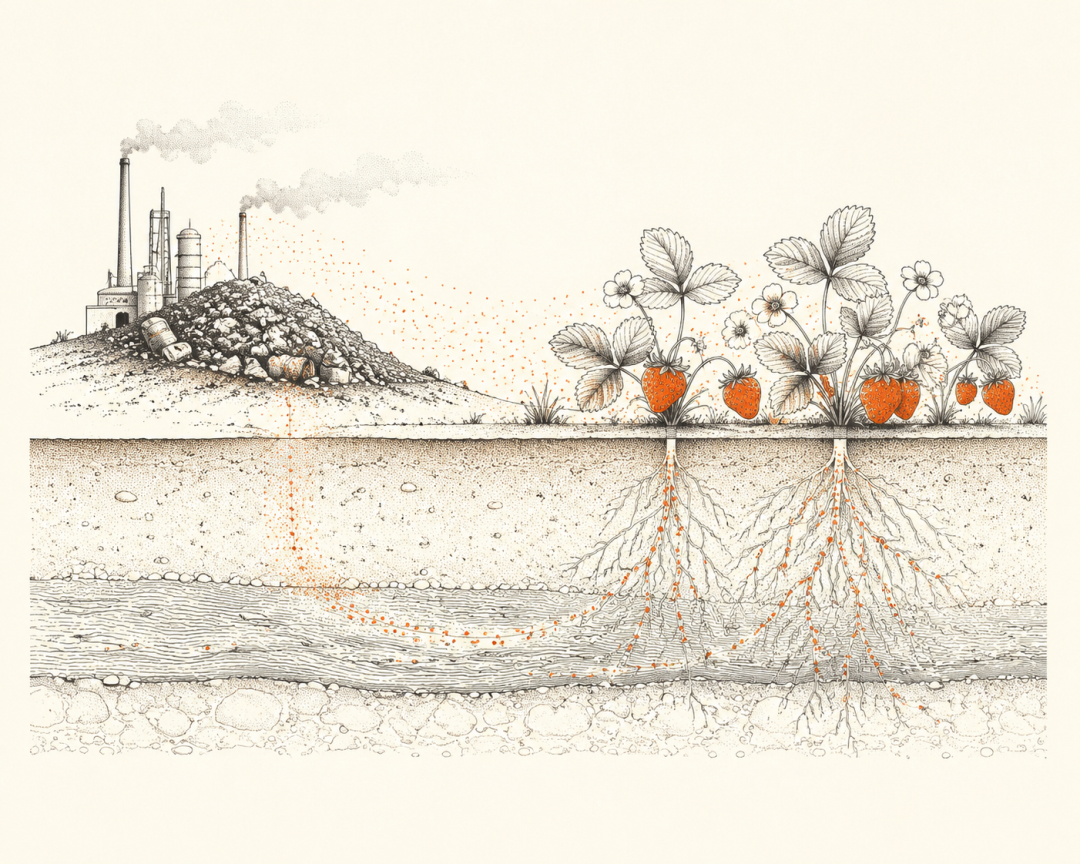
Figure 1 · PFAS environmental transport path: from industrial sources through soil and irrigation water into strawberry roots
PFAS is not a pesticide. Historically, a few pesticide formulations used fluorinated surfactants as adjuvants; agricultural PFAS contamination mainly comes from polluted irrigation water, sludge applied to farmland, industrial emissions, and firefighting foam.
PFAS enters strawberries mainly through environmental transport: if the groundwater, rivers, or soil where they're grown are contaminated, plant roots absorb the compounds. Different PFAS types accumulate in plants to different degrees. Once strawberries accumulate PFAS, consumers who eat them take on a correspondingly higher risk of PFAS intake.
01
Why PFAS isn't in the tests
WHY PFAS IS NOT TESTED
There are three reasons.
First, current standards don't require PFAS testing. China's pesticide-residue standards for fruit cover hundreds of pesticides and related chemicals; PFAS is an environmental pollutant, not a pesticide, and has not yet been included in routine regulatory fruit testing.
All tested pesticide residues meeting the standard cannot prove "the product is PFAS-free."
Second, there is no mature PFAS limit standard for domestic fruits and vegetables. Even if you proactively test for PFAS, you hit the next problem: once you measure it, against what do you judge? As of now, China's food limit standards for PFAS focus mainly on animal-source foods; the regulatory system for PFAS in fruits and vegetables is still being improved, and a mature limit-standard system has not yet formed. The EU, however, has already established PFAS limit standards for some foods and keeps expanding its scope.
Third, the cost of PFAS testing. PFAS is an emerging contaminant that global food safety has watched closely in recent years. Testing it is not as widespread as ordinary pesticide-residue testing; it usually requires high-precision methods such as LC-MS/MS (liquid chromatography tandem mass spectrometry), and a single test typically costs far more than ordinary residue testing. Without a regulatory mandate or market requirement, most companies won't rashly add testing items.
So, a report not testing PFAS is the current norm across the entire industry.
Then, back to the risks that pesticide residues and traceability should already be governing with mature standards — how has the strawberry industry performed in recent years?
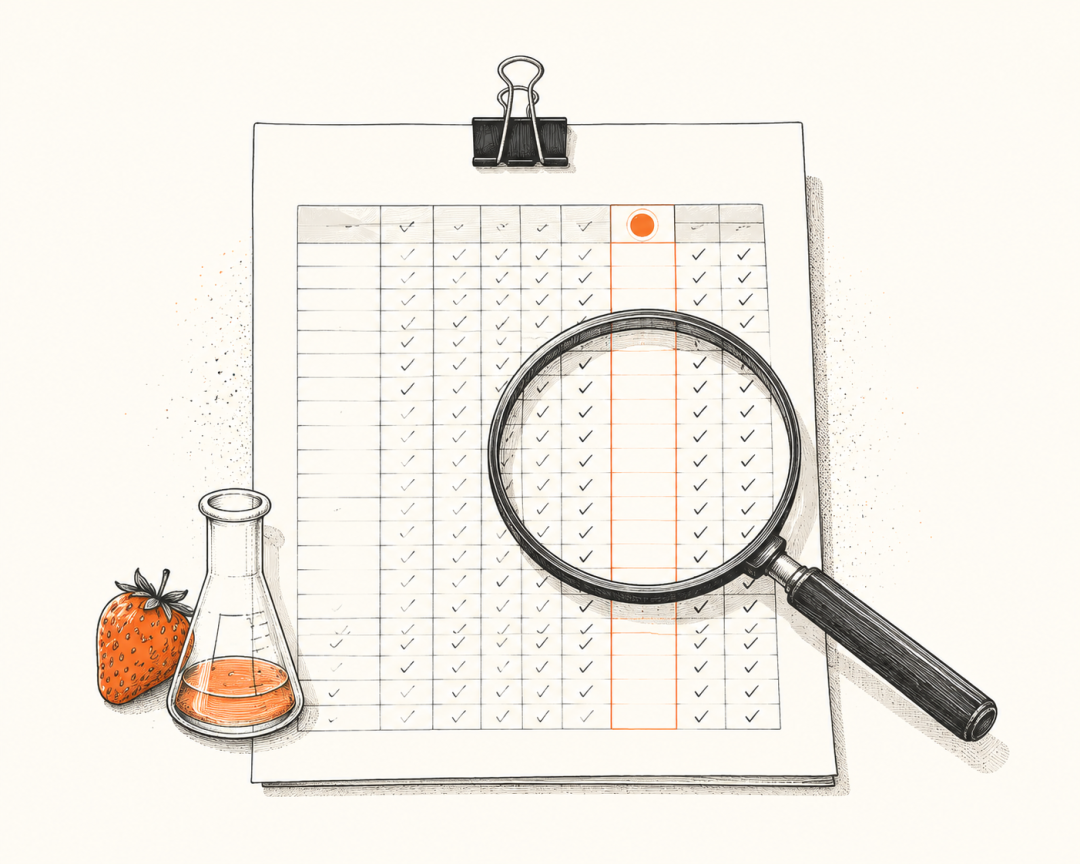
Figure 2 · All 361 pesticide residues passed, but PFAS is not on the test list
02
To control risk, the industry has done a lot of catching up
THE INDUSTRY'S RESPONSE
I researched five representative strawberry regions in China — Changfeng in Anhui, eastern Liaoning (Donggang, Dandong, Zhuanghe), Changping in Beijing, and Jiande in Zhejiang — and reviewed the cultivation, testing, certification, and traceability information publicly disclosed by more than ten representative companies. The biggest change came from regulation.
Commitment-compliance certificate — since February 2026, it is required that marketed fruits and vegetables be accompanied by a grower's commitment not to use banned pesticides, that residues comply, and that testing records be kept, so problems can be traced to a specific responsible party.
This means fruit and vegetable food safety is no longer just verbal advocacy, but has formally entered "traceable source, accountable person."
Different regions took different paths. Changfeng, Anhui — one of the country's largest facility-strawberry regions — focused on digitalization: a "Digital Strawberry" platform brings temperature, humidity, fertilization, and plant-protection information under unified management, gradually attaching a compliance certificate to each box of strawberries, bringing data management into what was traditional experience-based management. Eastern Liaoning, an important strawberry export base, raised its standards to export requirements — some test items increased from 73 to 174, and Dalian Customs' fast channel can complete 300+ residue screens at once, in about 3.5 hours at fastest. Beijing's Changping and Zhejiang's Jiande emphasize making things visible to consumers — many products carry QR codes linked to Zhejiang's province-wide "Zhe Nong Code," scannable to query base and testing information.
Different paths, but several regions are working to make food safety more transparent and more verifiable.
Yet a region is only a loose whole. What truly determines safety is the specific company.
03
Different companies, solving different problems
WHAT EACH PLAYER SOLVES
After researching more than ten representative companies, I realized: different types of companies today are each solving problems along different dimensions.
1Shengye Guoyuan Eastern Liaoning · Export-oriented
Sample 01 / 06 · Export-oriented · cares most about testing
Public records show it holds green-food certification and export-orchard and packing-house qualifications; its packaging QR code can trace the base and harvest time; "nine-unified" digital management covers 150+ farm households. Management actions once scattered among farmers are being unified. Currently verifiable public information includes green-food certification; the QR code can trace origin, but deeper production data is not yet public.
2Jiande Wonong Jiande, Zhejiang · Consumer-oriented
Sample 02 / 06 · Consumer-oriented · cares most about traceability
Not large in scale, yet it proactively uses the "Zhe Nong Code" and commitment-compliance certificate; its lead once picked and tasted berries live on stream to answer residue questions. No verifiable green or organic certification number was found on public channels; the main basis is still test reports and the company's own statements.
3Changping Wande Yuan Changping, Beijing · Seedling cultivation
Sample 03 / 06 · Seedling cultivation · cares most about varieties
Closer to the upstream of the chain — cultivates over 13 million strawberry seedlings a year, holds multiple seedling patents, and discloses GAP Level 1 and green-food Grade A certification. Good seedlings mean more stable quality and lower disease risk. But it faces growers rather than consumers, so it has no end-product traceability system.
4Changfeng Tianfeng Changfeng, Anhui · Pesticide-reduction practice
Sample 04 / 06 · Pesticide-reduction camp · cares most about pesticide control
Public introductions mention using predator mites for pest control and replacing some chemical fungicides with ozone or sulfur fumigation. But these measures haven't yet been turned into consumer-verifiable information, and there's a lack of third-party certification.
5Jiande Hongqun Jiande, Zhejiang · Pesticide-reduction practice
Sample 05 / 06 · Pesticide-reduction camp · cares most about pesticide control
Similar to Changfeng Tianfeng, it also publicly describes replacing some chemical pesticides with biological and physical methods to reduce field pesticide use. But it likewise hasn't formed consumer-directly-verifiable public evidence, nor third-party certification backing.
6Changping Tian'an Agriculture Changping, Beijing · Full traceability
Sample 06 / 06 · Full traceability · multiple certifications
Mainly builds organic, GAP, ISO 9001, and other certifications plus a full traceability system around its overall vegetable business; it is expected to gradually disclose strawberry-specific certification information later.
APPENDIX · Observations on the six companies' public-information maturity
What Food Booth cares about is not whether a company is good or bad, but the maturity of its public evidence. From a company intro, to certification, estate, and test report, to QR code and transparency report — each step forward gives consumers more independently verifiable information.
Public-information maturity — six companies
| Company | Origin identity | Transparency | Quality cert. | Traceability | Consistency | Responsibility |
|---|
| Shengye Guoyuan | Leading | Established | Established | Established | Established | Established |
|---|
| Jiande Wonong | Established | Established | Developing | Established | Established | Established |
|---|
| Changping Wande Yuan | Established | Established | Established | Established | Established | Developing |
|---|
| Changfeng Tianfeng | Established | Established | Developing | Developing | Established | Developing |
|---|
| Jiande Hongqun | Established | Established | Developing | Developing | Established | Established |
|---|
| Changping Tian'an Agriculture | Established | Established | Established | Established | Established | Established |
|---|
Levels: Leading · Established · Developing (high to low). This table is an observation of public-information maturity, not a quality ranking; Food Booth does not judge whether a company is good or bad, only observes how sufficient its public evidence is. Levels are judged from each company's disclosed materials; companies may supplement public information according to the standard on their own.
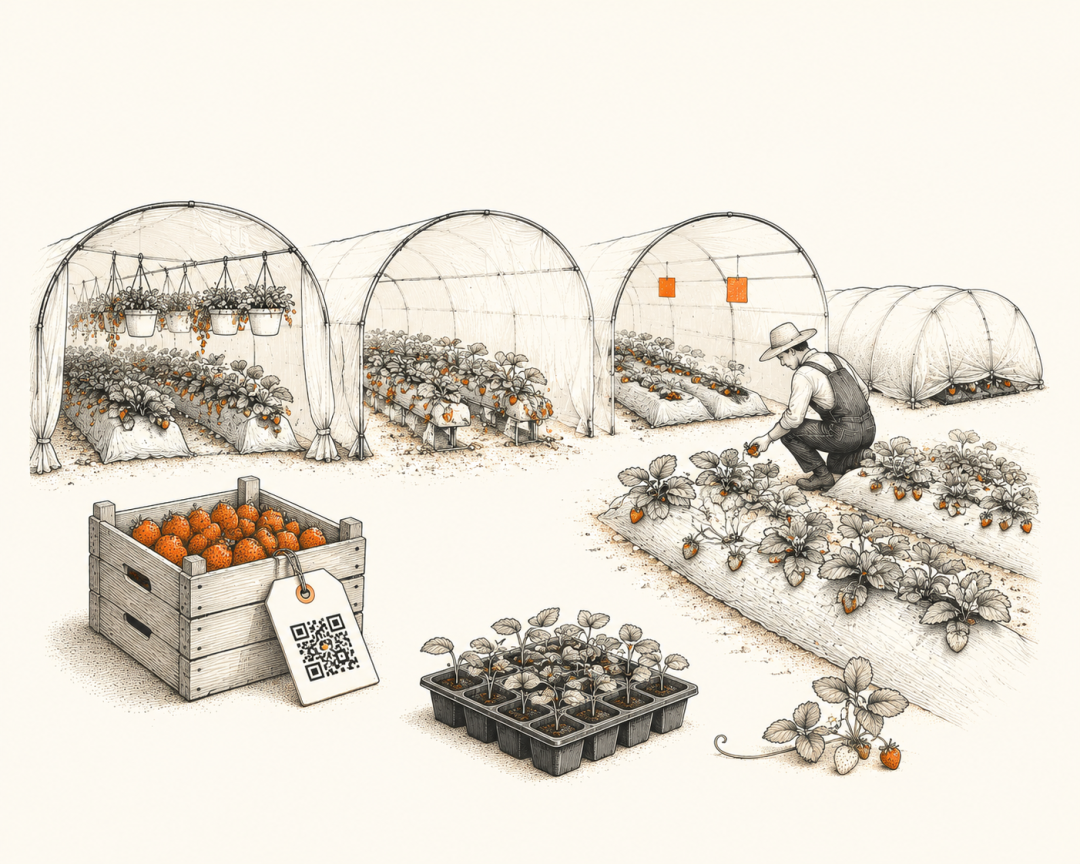
Figure 3 · Different types of companies, each solving problems along different dimensions
04
What PFAS looks like across these companies
PFAS ACROSS THE FIELD
The companies above each emphasize residue testing, traceability, digitalization, or green certification. But observed under the PFAS premise, as of now, not one company has disclosed strawberry-specific PFAS test results — and neither have the five regions.
Routine PFAS testing is not yet widespread — this is the current reality of China's strawberry industry.
PFAS is a family of chemicals; more than 10,000 are known, and their properties and health risks vary widely. The scientific community generally believes short-chain PFAS usually accumulate in the human body less than some long-chain PFAS, and their long-term health effects are still under study. The Chinese Research Academy of Environmental Sciences has publicly reminded that ordinary consumers' dietary PFAS exposure is usually far below occupational-exposure levels; diet is only one source of PFAS exposure — drinking water, dust, and food packaging can also contribute. Seeing the word "detected" need not cause panic; what's more worth attention is the type and amount detected.
05
Back to the box of strawberries in your hand
BACK TO YOUR BERRY
Today's strawberry industry is not as bad as some online discussions describe. Regulation, regions, and companies have all built increasingly complete systems around traditional food safety — commitment-compliance certificates, residue testing, product traceability, digital management, green certification.
Moreover, food safety is not a forever-fixed standard. What drives its continued progress in the future may precisely be the new problems not yet fully absorbed into the system today. PFAS is only one of them.
Food Booth · Four things to check when buying strawberries
- Is the producing entity clear — who grew it, who is responsible;
- Is traceability information provided — are batch, base, or testing channels findable;
- Which certifications or test items are disclosed — not just slogans;
- Which issues are not yet tested or disclosed — such as the emerging contaminant PFAS.
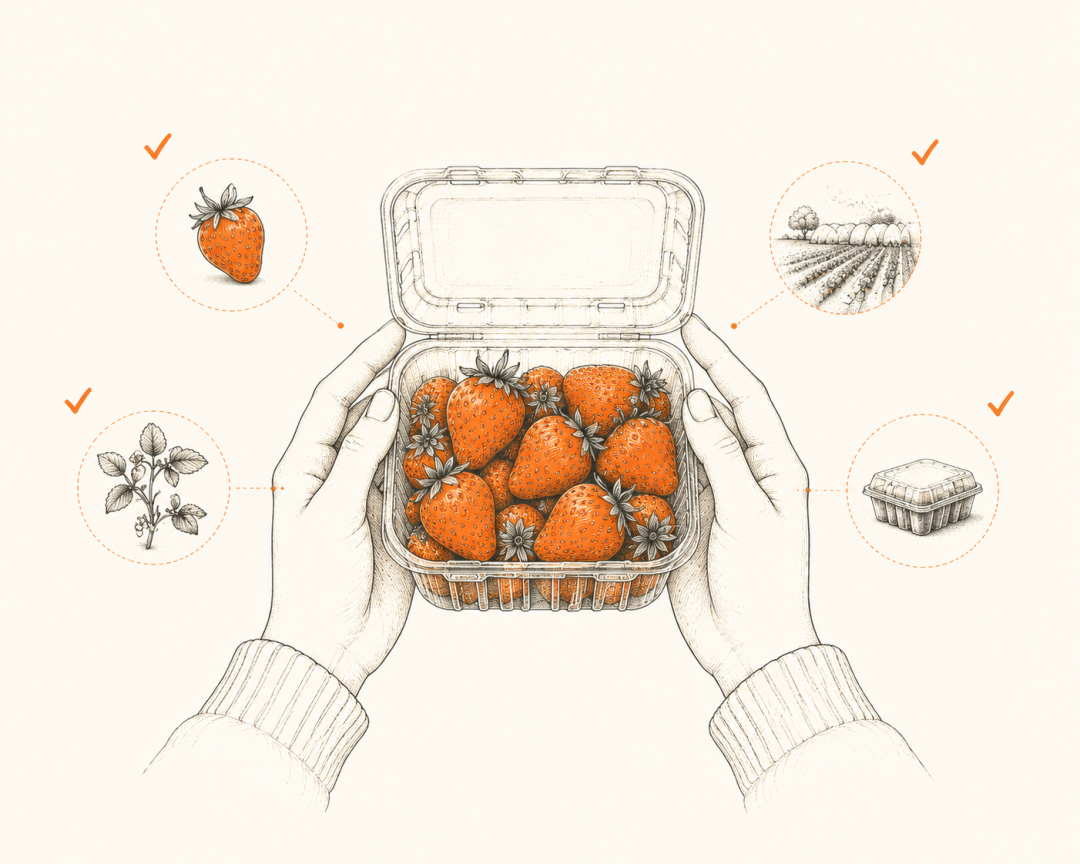
Figure 4 · Back to the box of strawberries in your hand
The more complete the information, the easier it is for you to make your own judgment.
Only through continuous disclosure and constant verification can food earn consumers' trust.
FOR BUYERS · One line for procurement people
Food Booth focuses on public information and does not give procurement advice. Actual purchasing still requires comprehensive judgment combining specifications, certification, supply capacity, and commercial terms.
FOR READERS · One line for consumers
A test report can be read for its result alone. Liked for the result, chosen for the price — nothing wrong with that. What Food Booth hopes is that when you're willing to understand further, there's another way to look at it: beyond flavor, there's origin; beyond brand, there's supply chain; beyond promotion, there's evidence.
||| END
Professional statement · Based on public company and government information
Food Booth conducts research and organization based on public information from companies and governments. What we care about is the sufficiency of public information, and the verifiable evidence formed by quality management, supply-chain governance, and industry practice.
The company cases in this article represent only information publicly available as of July 2026, and do not constitute a guarantee of product quality, safety, or commercial value, nor any procurement or investment advice.
Some historical materials come from public reports, and differences in wording may exist between sources. If companies or institutions provide new public information, Food Booth will continue to update related content.
The author of this article has not accepted any form of commercial sponsorship or paid promotion from the companies mentioned.
- GB 2763-2021 "National Food Safety Standard — Maximum Residue Limits for Pesticides in Food" and subsequent amendment announcements
- European Commission Regulation (EU) 2022/2388 on PFAS limits in food
- Chinese Research Academy of Environmental Sciences, "PFAS Environmental Risk and Public-Health Science Popularization"
- Ministry of Agriculture and Rural Affairs, "Agricultural Product Quality-Safety Commitment Compliance Certificate System" implementation notice (Feb 2026)
- Dalian Customs export-fruit residue fast-test channel public information
- Zhejiang Provincial Department of Agriculture and Rural Affairs "Zhe Nong Code" traceability platform introduction
- Public disclosures from each company's website, official account, and e-commerce platform (as of July 2026)
- Changfeng County "Digital Strawberry" big-data platform public materials
THANKS FOR READING