FOOD BOOTH · Issue 001 · 2026.07
Why Pu'er coffee earned its own product-category national standard
How one origin used nearly two decades to turn an "invisible commodity" into a verifiable regional brand — read through a single national standard.
Pu'er Coffee · Geographical Indication
FOOD BOOTH MANIFESTO
An industry is worth our attention when it leaves behind enough verifiable evidence.
What kind of food is worth your time to understand? Where does it come from? Who made it? Is there third-party verification? Can problems be traced to a specific batch? Are companies willing to make this information public? These professional questions directly determine how much of the real picture consumers can actually access.
What Food Booth aims to do is simple: trace the origin, interpret the certifications, observe the supply chain — turning the information of the professional world into judgment criteria that ordinary consumers can understand. We don't focus on which food is "best." We focus on which food leaves behind more verifiable evidence. For our first issue, we start with Pu'er coffee.
The question we set out to answer
01
A year later, the real value of this news
From a single standard to an entire industry
On May 30, 2025, the "Geographical Indication Product Quality Requirements — Pu'er Coffee" (GB/T 45690-2025) was released and took effect on September 1, 2025.
A year on, this news is rarely mentioned anymore. China publishes a large number of national standards every year, and the vast majority never reach the public eye. Why did Pu'er coffee, at that particular moment, get a national standard of its own?
Following this question deeper, behind the product story is the gradual formation of an entire industry's standardization capability.
TIMELINE · Pu'er coffee's path to standardization
Pu'er coffee's path to standardization
| Year | Milestone |
|---|
| 1988 | Nestlé enters Yunnan |
|---|
| 2013 | GI certification mark approved |
|---|
| 2021 | National GI product protection |
|---|
| 2025 | National product standard released |
|---|
Public records show: In 1988, Nestlé began promoting coffee cultivation in Yunnan; in 2013, "Pu'er Coffee" was approved as a national geographical-indication certification mark; in 2021, it was brought under national geographical-indication product protection; in 2025, the national standard was released. Twelve years passed between the GI certification mark and the national standard.
A national standard does not mean the industry is already mature, nor does it directly represent leading quality. It means: the industry has accumulated enough practical experience to form a verifiable, repeatable technical language. As Pu'er coffee keeps entering domestic and international markets, building a quality language the outside world can understand and verify has become a basic capability that is simply necessary.
This capability is not formed by a single company. It is the result of scaled cultivation, processing capacity, third-party certification, market feedback, industry coordination, and a growing number of companies continuously disclosing information — all pushing forward together.
02
Before it was called "Pu'er coffee"
From invisible commodity to a named origin
The premium coffee you drink may already come from Pu'er — you just don't know it yet
According to public reports and local sources, in 2003 Nespresso used coffee beans from Pu'er, Yunnan in its product line for the first time; this batch was used to make a limited-edition coffee for expert tasting. That year, Pu'er coffee began entering the international specialty-coffee supply chain.
The beans made it into the world's top products, yet few consumers knew they came from Pu'er. For a long time, Pu'er played the role of a raw-material origin in the global coffee supply chain, rather than a consumer-recognized origin brand.
Until 2025, when "Pu'er coffee" became an official name backed by a national standard.
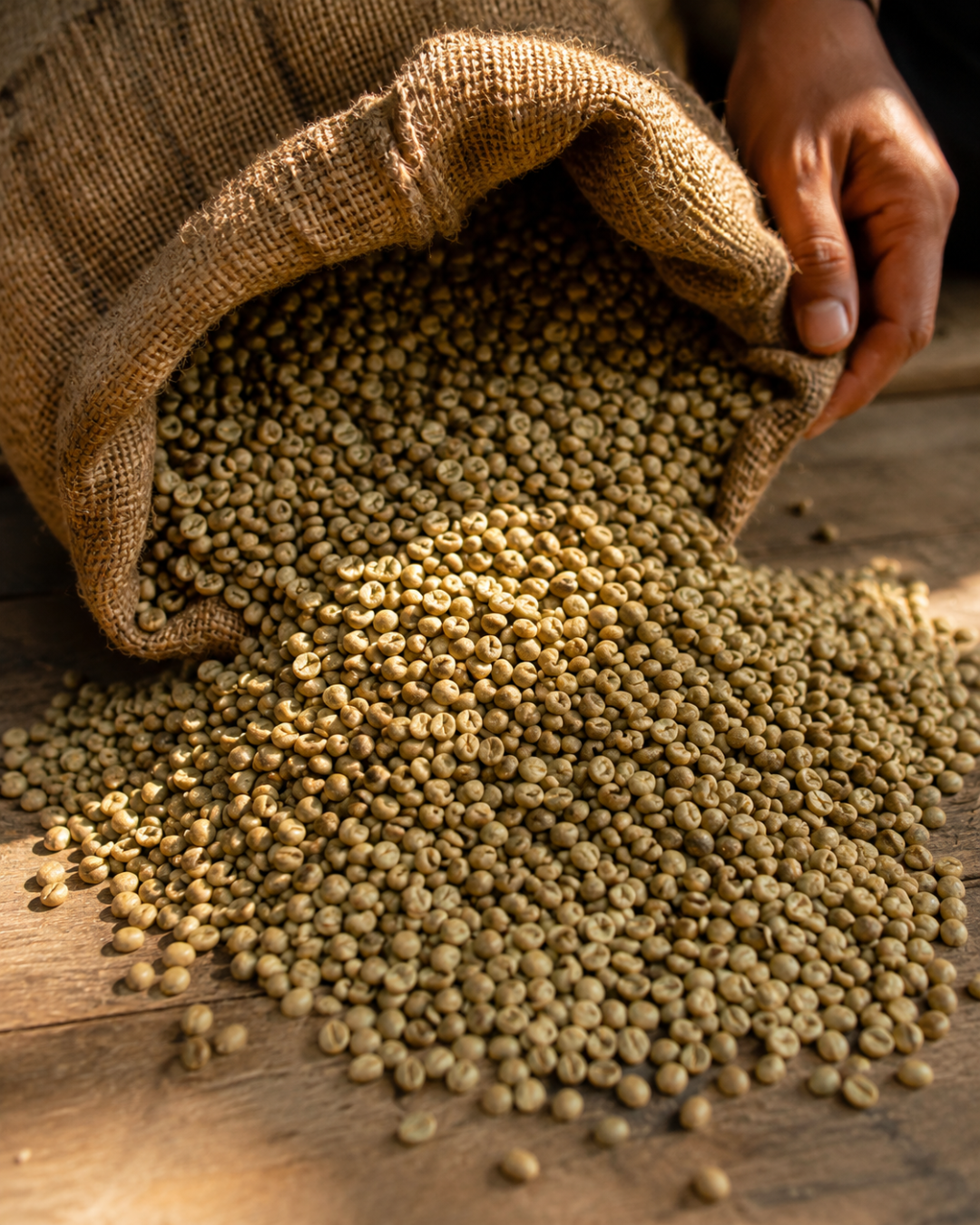
From "invisible commodity" toward a "named origin backed by a national standard"
How hard was the climb from the low point of an "invisible commodity" to a "named origin backed by a national standard"? Let's look at the price curve. In 2015–2016, Yunnan's green coffee bean purchase price fell to 13–14 yuan per kilogram, already below the cost of cultivation — the average price for that harvest season published by the Yunnan Coffee Association fell exactly in that range, as reported by Xinhua News Agency, Yicai, and others. Under this price inversion, many coffee farmers in Pu'er and Baoshan cut down their coffee trees and switched to other crops.
The turning point came around 2018: with the rise of domestic coffee consumption and the shift toward specialty quality, green bean prices kept climbing; by the 2022–2024 harvest seasons, Yunnan's commercial bean price had nearly doubled, rising from a little over ten yuan per kilogram to the 30–50 yuan range. In Ning'er, Pu'er, according to local public reports, fresh coffee cherry prices recovered from a low of one or two yuan per kilogram to nine or ten yuan per kilogram for premium fruit.
Between "cutting down trees" and "rushing to plant" lies an entire slowly-built system of standards, certifications, and brand.
DATA · Yunnan green coffee bean purchase price (yuan/kg, illustrative)
13–14 yuan/kg — trough (2015–16), already below cultivation cost
~20 yuan/kg — turning point (2018)
30–50 yuan/kg — recovery (2022–24), nearly doubled vs. before
Illustrative presentation of publicly reported ranges, not month-by-month precise data.
The entire system took nearly two decades to gradually take shape. The national standard merely turned it from an industry-practice state into a formal document that anyone can look up.
Three sets of data: the national standard didn't come from nowhere
To answer "why Pu'er," I spent two weeks reviewing the public information of 15 Pu'er coffee companies. These 15 were selected from the geographical-indication user enterprise directory, covering cultivation, processing, branding, and export. I checked each one's website, official account, e-commerce, certifications, and business registration, and cross-checked against public information from the Pu'er Market Supervision Administration, CCTV News, and others.
What I focused on was how much verifiable information these companies leave for the outside world.
The national standard is not where the story begins. It is the natural result of the industry's long-term practice. Three sets of public data below.
Group 1 · Scale
Pu'er City currently has about 679,000 mu of coffee cultivation, more than half of the national total. Annual output is close to 60,000 tons, with a comprehensive output value exceeding 6 billion yuan; both output and value rank among the top prefecture-level cities in the country. More than half of the coffee you drink domestically comes from Yunnan; of what Yunnan produces, more than half comes from Pu'er. Scale itself does not produce standards, but standards come from common practice — and it is hard to talk about commonality without scale.
Group 2 · Certification
Official data shows that among the city's coffee gardens already in production, about 300,000 mu are 4C-certified, about 42,000 mu hold EU and US organic certification, and about 20,000 mu hold Rainforest Alliance and other sustainability certifications. At the company level, as of public statistics, 335 households have obtained China organic product certification, ranking among the top in Yunnan province by number of certified companies. The type and number of certifications have nothing to do with quality. Certification reflects the growing willingness of more companies to accept third-party audits under common rules.
Group 3 · Market
Public data shows that in 2024, #Yunnan coffee exports were about 32,500 tons, up 358% year-on-year, exported to the Netherlands, Germany, the US, and many other countries and regions. Part of that 358% growth comes from demand recovery, part from a low prior base. Yunnan coffee is entering more and more international markets, meeting different markets' requirements for quality, safety, certification, and sustainability.
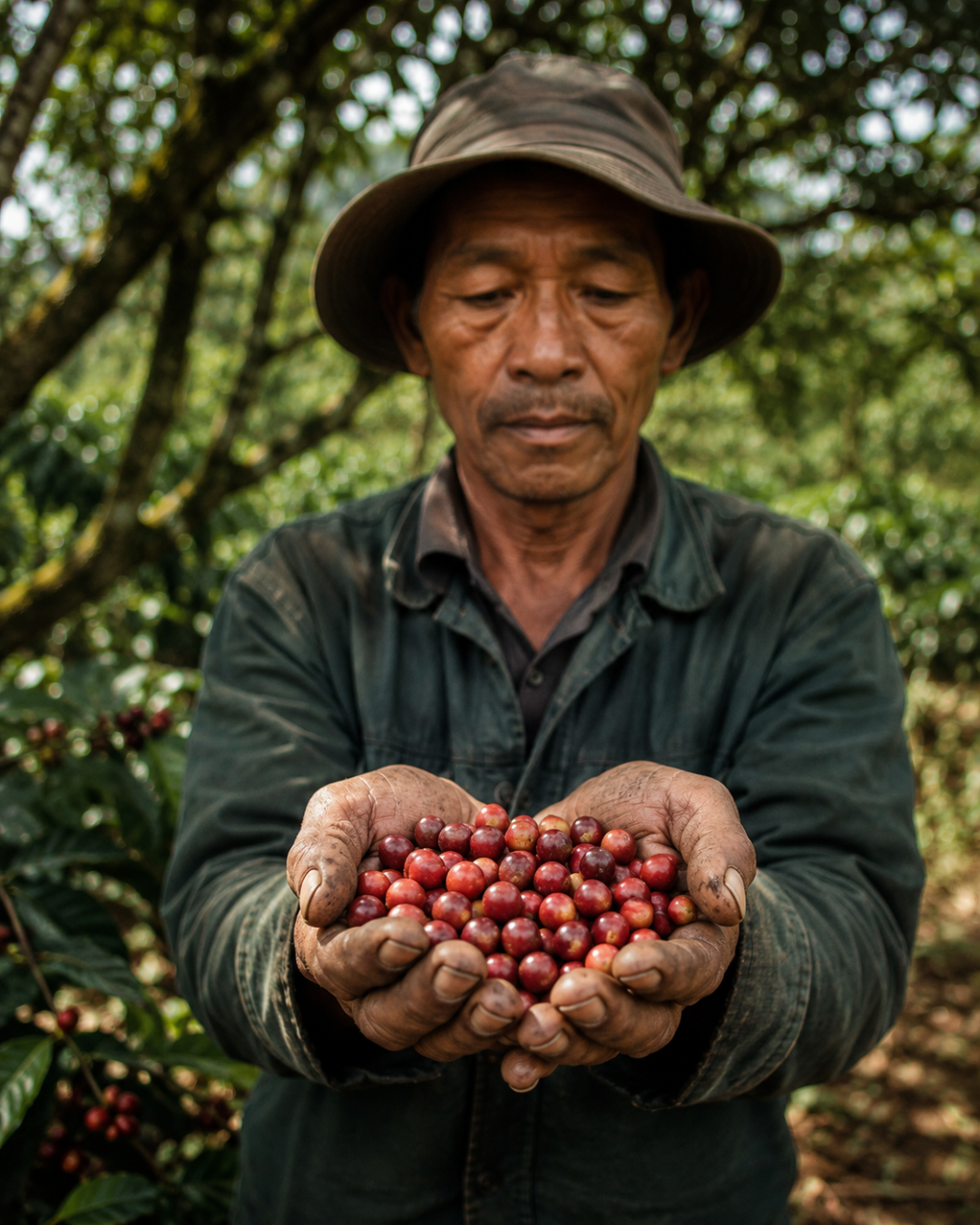
For export-oriented industries, the importance of information disclosure is gradually rising. Overseas buyers look at origin, certification, traceability, supply-chain stability, and whether companies continuously disclose quality information.
Pu'er coffee's national standard also responds to the international market's demand for transparency and standardization, providing a quality language the outside world can understand for a growing number of international buyers.
The shortfalls remain
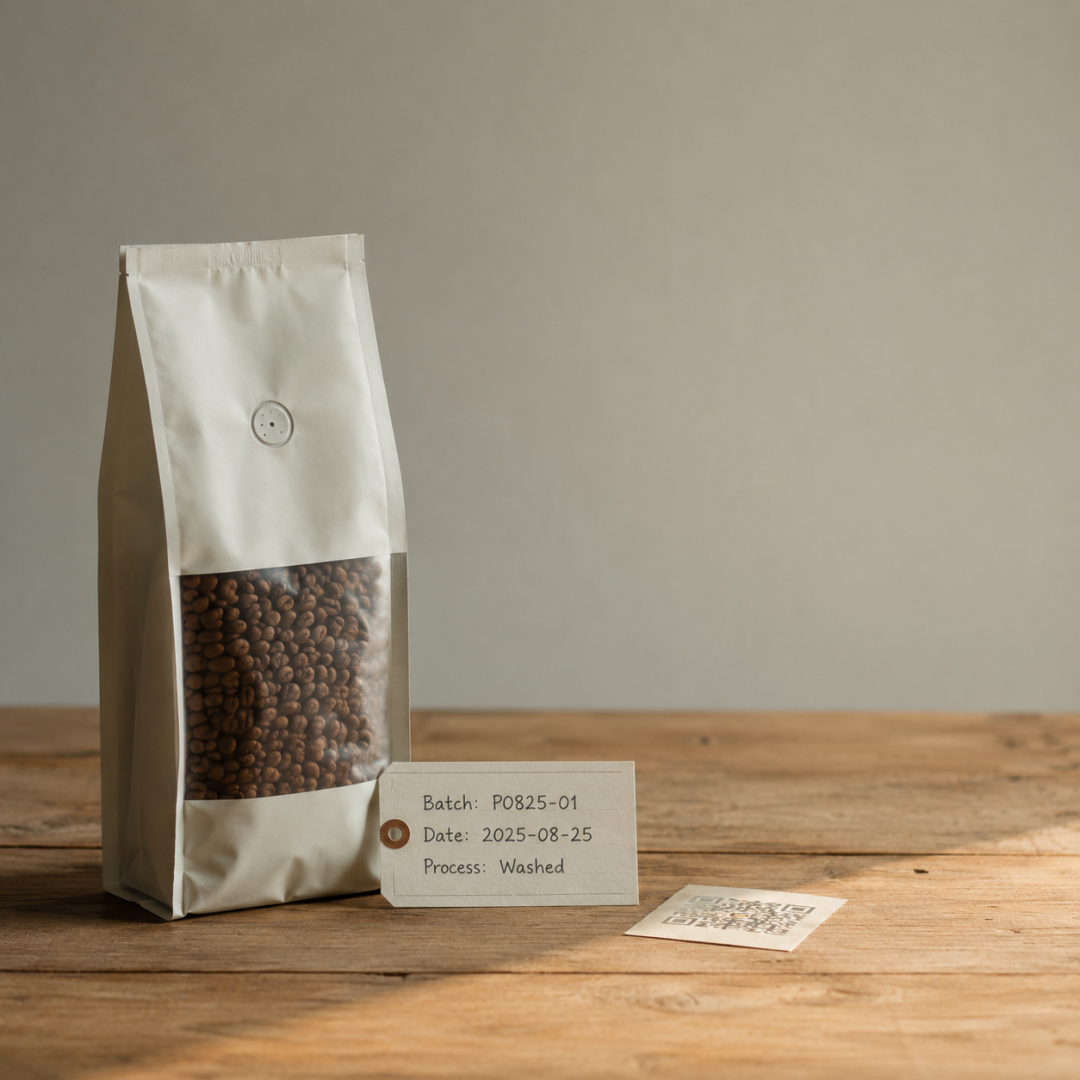
Back to the public information of these 15 companies. From a traceability perspective, none can yet be independently verified by the outside world. For example, on which exact day a batch of coffee beans was processed, from which plot of land — consumers can hardly find an independent answer through public channels.
In fact, many companies already have the capability and have built internal traceability systems. It's just that this information is not yet open to the public. As more companies voluntarily disclose batch and origin information, this will gradually improve.
What's worth studying is no longer the national standard, but the companies driving the industry's change. In the next piece, I want to talk about the 4 most noteworthy among these 15 samples.
TO BE CONTINUED
Professional statement · Public information · Not an endorsement
Food Booth conducts research and organization based on public information from companies and governments. What we care about is the sufficiency of public information, and the verifiable evidence formed by quality management, supply-chain governance, and industry practice.
The company and industry data mentioned in this article represent only information publicly available as of July 2026, and do not constitute a guarantee of product quality, safety, or commercial value, nor any procurement or investment advice.
Some historical materials come from public reports, and differences in wording may exist between sources. If companies or institutions provide new public information, Food Booth will continue to update related content.
The author of this article has not accepted any form of commercial sponsorship or paid promotion from the companies mentioned.
- Geographical Indication Product Quality Requirements — Pu'er Coffee (GB/T 45690-2025)
- Pu'er Market Supervision Administration: "Pu'er Coffee: From Geographical Indication Cultivation to Whole-Chain Co-governance Empowerment" (2025 "Promoting Food Safety Social Co-governance" Top 10 Case)
- China Media Group (CCTV News) public reports on Yunnan's coffee industry
- Public materials from Pu'er Municipal People's Government and Yunnan Provincial Department of Agriculture and Rural Affairs
- Coffee-industry public reports (Nespresso's 2003 use of Yunnan coffee beans)
- 2025 China Brand Value Evaluation Release (China Geographical Indication Product Regional Brand Value Evaluation List)
THANKS FOR READING